Shirley Shabnam
Hi, I'm Shirley, doing sociotechnical research in the MS Human-Computer Interaction program at the University of Maryland. I am interested in researching relationships of technology with systemic, infrastructural and interpersonal harm. I hope to conduct this inquiry through accessible data visualization and access-first community-based participatory research. My work aligns closely with Critical Design, Participatory Action Research, and often focuses on exploring design interventions within sociotechnical systems through community-engaged research. My go-to methods are speculative design, design futuring, Participatory Design and co-design.
Currently, I am seeking to join a PhD program in HCI / Information / STS starting Fall 2027 to receive mentorship and continue my research.
Recruit me to be your student!
ABOUT SHIRLEY'S RESEARCH
My positionality as a researcher is informed by my experience in community organizing, Disability, and survivorship. I view research as a tool for advocacy to create sustainable impact through refusal and epistemic resistance. Thus, my research is most often based in the community, centering community values and aspirations.
Sociotechnical systems and infrastructuring research in HCI and CSCW interests me particularly as they allow me to think deeply about technology's role in broader societal systems. My research focuses on the relationships with actors –human, material, political– in these infrastructures and the power, safety and vulnerability therein. Looking to the future, I hope to work on the intersections of resistance work, Data Refusal, and Infrastructuring Digital Safety. I am interested in participatory modes of building resistance tools and frameworks. As such, I explore accessible data visualization as a mode to visceralize community-designed rhetoric.
As speculative design offers powerful modes of imagining just, alternate futures when oriented critically, I consider Infrastructural Speculations introduced by Wong et. al (2020) as my anchor in situating speculative methods for sociotechnical research. Although most of my research has been qualitative, I would like to explore mixed-methods research to understand better the more technical impacts of computing within sociotechnical systems.
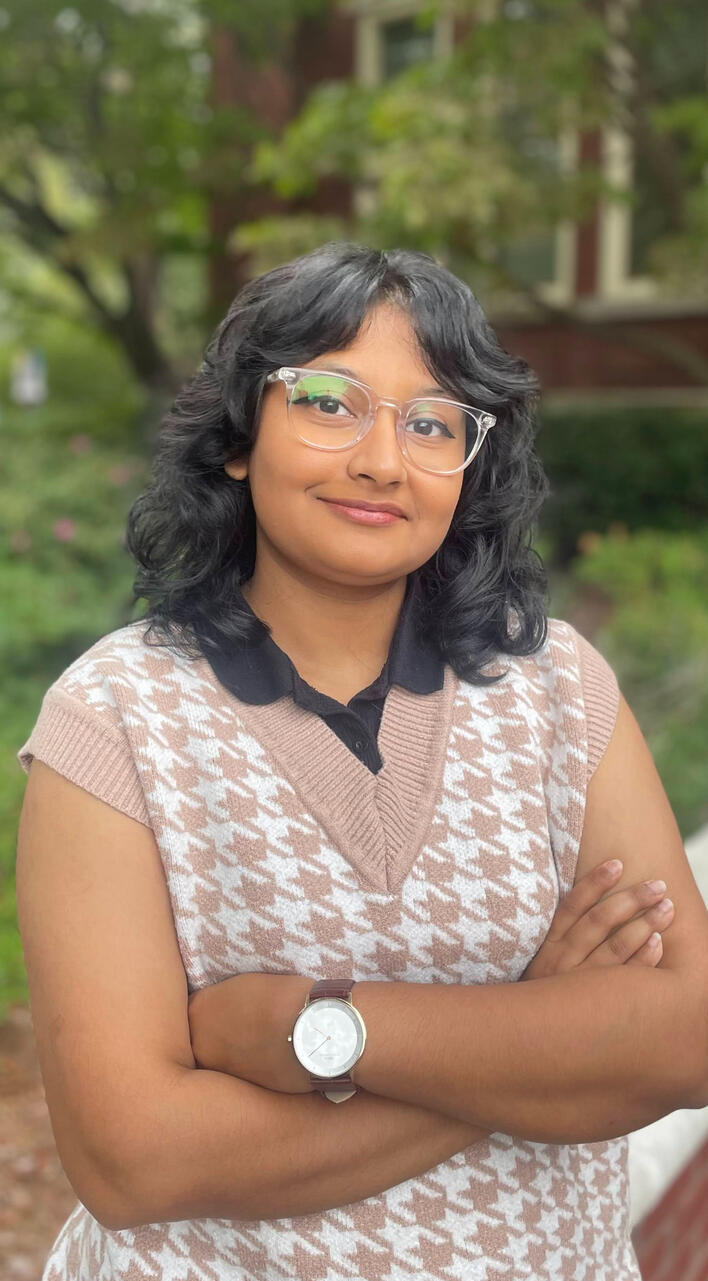
Image Description: Shirley, a brown person with shoulder-length dark, curly hair wearing a beige houndstooth sweater vest with a black collared shirt underneath, a brown analog watch, clear framed rectangular glasses, crossing his arms with trees in the background.
WHAT AM I UP TO?
I am wrapping up my Summer Internship at the American Association for People with Disabilities (AAPD) where I am working with the non-profit organization Project LETS. At Project LETS, I am leading the data story web archive for their psychiatry survivors' Oral History project. I am working on creating accessible data visualizations to construct a counter-narrative of anti-carceral mental health practices. The methodology for this project was constructed in community with survivors and colleagues through a series of co-design sessions. Live website coming soon!Back to academia, I am working on a fiber arts data visualization project supported by the Maryland Institute for Digital Humanities and African American Digital & Experimental Humanities. I am using a mechanical knitting machine to create textile visualizations for a visceral experience demonstrating the racial disparity in psychiatric diagnoses.This Fall, I will begin working on my Master's thesis project advised by Professor Sheena Erete and Dr. Dan Greene where I am investigating how to visibilize the the harms embedded in the sociotechnical system into which autonomous vehicles (AV) are deployed. As the assemblage of labor, policy, technologies, and materials enable the urban infrastructure into which AVs are deployed, I am exploring a more participatory approach to policymaking for Disabled people of color. As a Disabled person of color interested in policy interventions to mitigate the societal harms of emerging technologies, I am positioning myself as a member of the community of interest in pursuing this project. My thesis project is supported by the Thurgood Marshall Research Fellowship (TMRF) from the School of Public Policy at UMD.
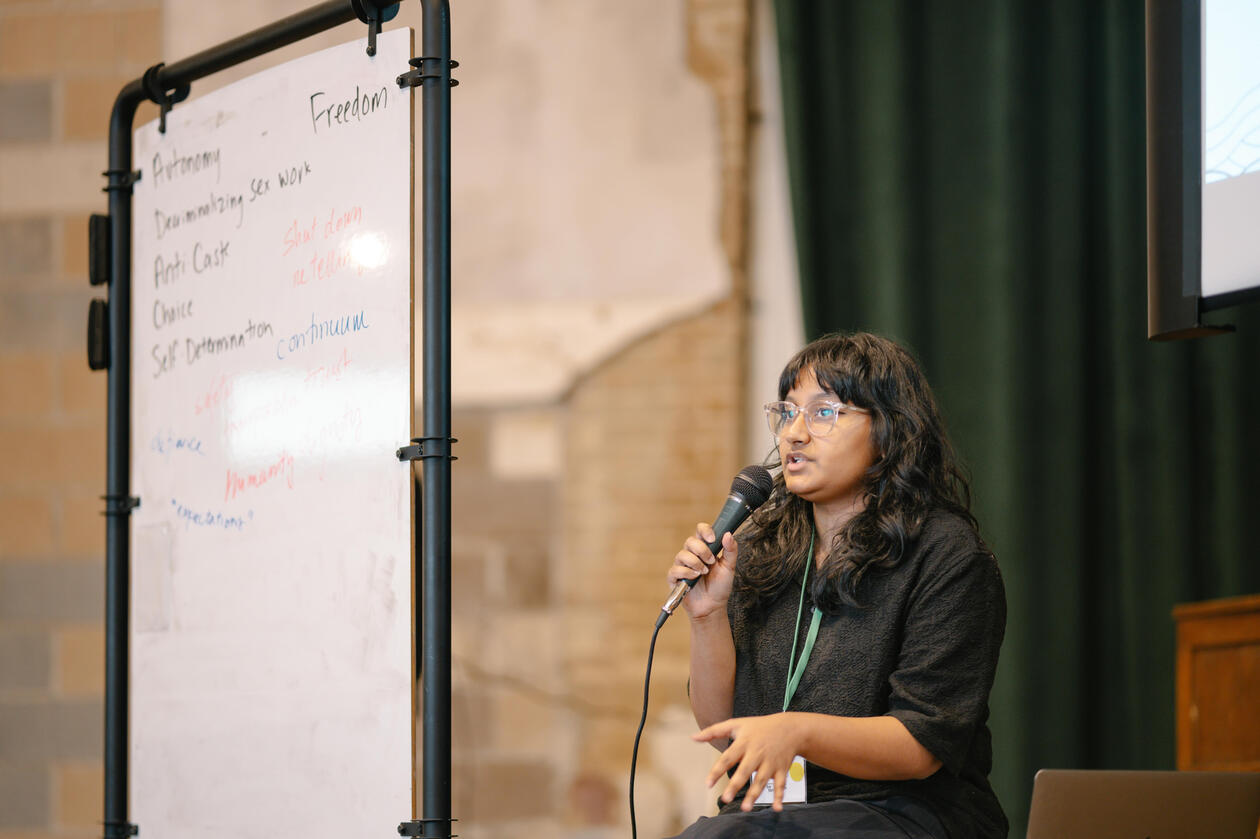
Image Description: Shirley sitting down wearing a cool black short sleeve shirt, a green lanyard speaking on a microphone next to a whiteboard with hand-written words reading: Autonomy, Decriminalizing sex work, Anti-caste, Choice, Freedom, Self-Determination, Humanity, continuum. The background is blurry.
RECOGNITIONS
Thurgood Marshall Research Fellowship - School of Public Policy, The University of Maryland
Dr. Aby L. Parsons' Advocacy in Action Award - The LBGTQIA Resource Center, Georgia Tech, 2025
Advocate for Accessibility Award - Section 504, Georgia Tech, 2023
Feature and Interview - Undergraduate Research Opportunities Program, Georgia Tech, 2023
Helen Fellowship - Helen Gurley Brown Foundation and NCWIT
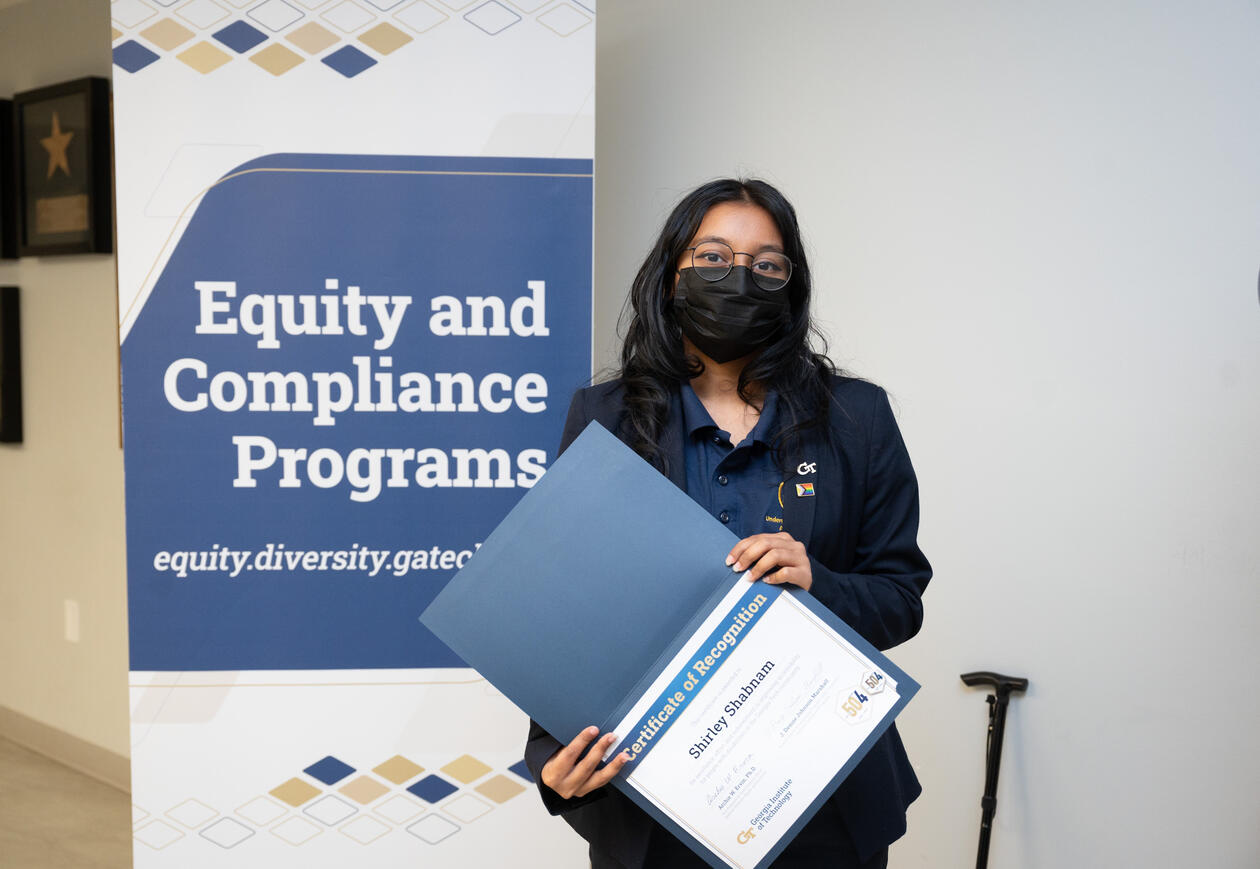
Image Description: Shirley holding the certificate of Advocate for Accessibility Award wearing a blue polo shirt and navy blazer with a Georgia Tech pin and a progress pride pin, round black glasses, and a black mask. Shirley is standing in front of a sign that says Equity and Compliance Programs. His cane is leaned against the wall in the back.
WHAT AM I READING?
Spirits of Resistance and Capitalist Discipline by Aihwa Ong
Disrupting D.C: The Rise of Uber and the Fall of the City by Katie J. Wells, Kafui Attoh, Declan Cullen
Behind Closed Doors: IRBs and the Making of Ethical Research by Laura Stark
ALWAYS REREADING
Reflexive Thematic Analysis by Clarke and Braun
Abolition.Feminism.Now. by Erica Meiners, Gina Dent, Beth Richie, Angela Davis
Race after Technology by Ruha Benjamin
Prefigurative Design for Research Justice by Mariam Asad, 2019
INTERESTED IN SPEAKING TO ME?
Please reach out! I love meeting people, and would love to chat.
Email me at [email protected] or Schedule a meeting with me here!
Recruit me please?
Shirley Shabnam
2026